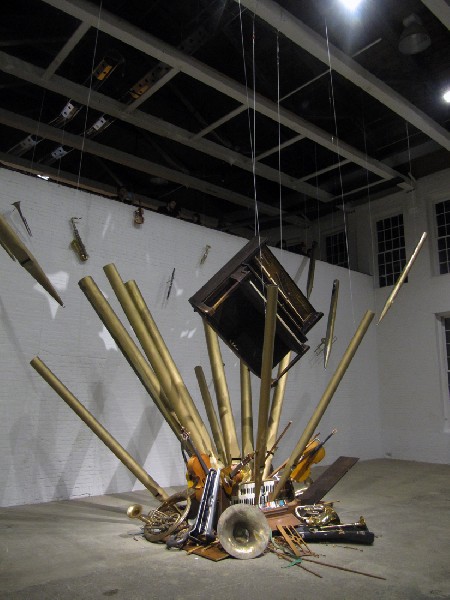
I have to respect someone who can put this much work into an exhibit, regardless of whether or not they have a higher concept.
Sunday, April 8, 2012
In defense of ridiculous art
It is impossible to take so much as a passing glance at modern art without acknowledging that some of it is totally ridiculous. Unfortunately, I love ridiculous art. My favorite type of ridiculous art is visually impressive, huge, impractical installation art. Mass MoCA is pretty good at supplying it. Still, I think there are certain virtues to this type of art. They take a lot of work to compose and create. Merely setting up an exhibit like the "Afrofuturism" one currently on display took weeks if not months. There was an exploded pipe organ in it -- there's no way that didn't take some work.
Good versus bad art
I am too occupied with trying to figure out what makes art good or bad. I am trying to form my taste, but it's entirely based in what I like in the moment. I don't really think about wide terms. I don't look at a piece of pleasant abstract art and decide I now like abstract art. Rather, I have been trying to keep an open mind and find out more about myself and about art through a lot of fresh experiences. I like to see new art. Some modern art can be silly or even outright stupid, yes, but I enjoy a lot of it. Concept art can be pretty cool.
I always try to keep an open mind when I see a new art piece because so much of what you get out of a work of art is the energy and thought you are willing to put into viewing it. A lot of it depends on the artist, but a lazy viewer can ruin a painting for themselves just as easily as a bad artist, and an unregarded painting can have certain qualities of excellence that a really enthusiastic, interested viewer will bring to the surface.
Dickie -- Question
On page 431 in our book, Dickie claims that institutional formality and
rules for art “would threaten the freshness and exuberance of art.” In what
ways would rules and formalities do this? In what ways could these things
promote and sharpen creativity? Is it possible to conceive of art without a
certain set of rules and expectations?
While there are definitely rules for art, and those rules are important, a person who can break them and get away with it ought to do so (which is what my 10th grade English teacher told me). We see this through all kinds of art, especially modern art. Good examples can be seen in poetry. Poetry and English in general follow a set of specific rules. The English language is governed by grammar. If a person writes a poem with unintentionally bad grammar, we do not appreciate the poem. It has been badly executed because the person writing it did not follow the rules and does not know how to write within them. However, we can't say that bad grammar is the mark of a bad poem. e.e. cummings is a Harvard-educated poet. His work is widely regarded as okay at the very least. He clearly knows how grammar works, and, knowing how the rules go, chooses to work outside of them.
Buffalo Bill's
defunct
who used to
ride a watersmooth-silver
stallion
and break onetwothreefourfive pigeonsjustlikethat
Jesus
he was a handsome man
and what i want to know is
how do you like your blueeyed boy
Mister Death
Maybe not anyone can break the rules. You have to first understand why the rules exist and how
to operate inside them. Once you can do that, though, breaking them is fair game, and some of
the most successful artists in history have been people skilled enough to do just that.
Subscribe to:
Comments (Atom)